Take The ‘M,’ Caitlyn. You Earned It
Take The ‘M,’ Caitlyn. You Earned It

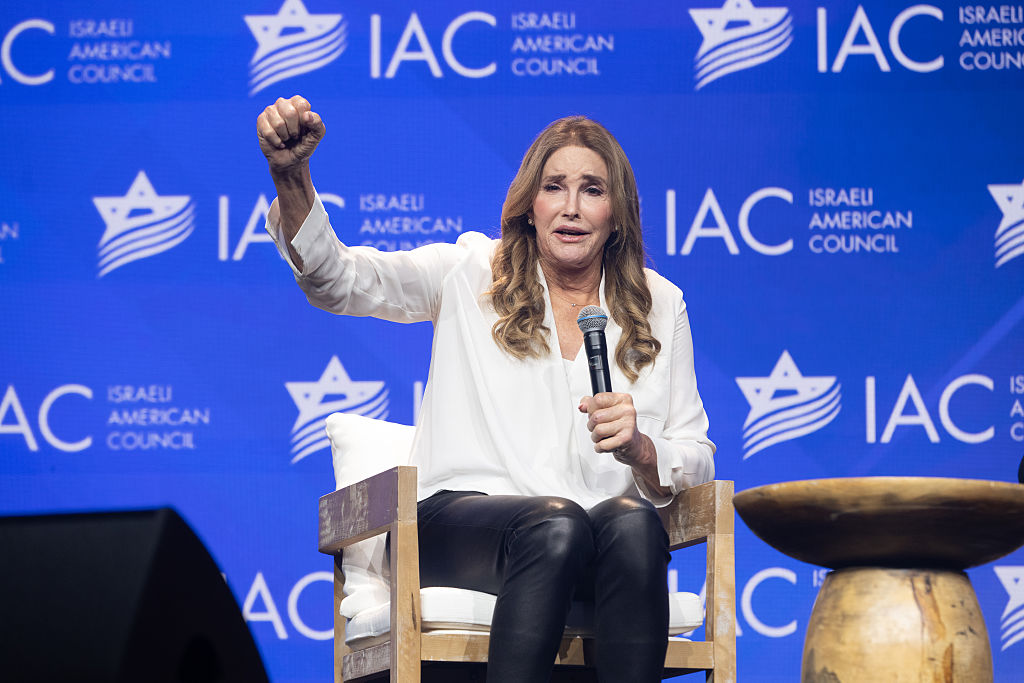
The cover that sparked this piece was almost too perfect: Caitlyn Jenner says her passport has the wrong gender, but she is still MAGA.
That is not just a contradiction. That is the whole lesson.
In a recent Newsweek report on Jenner’s comments to Tomi Lahren, Jenner said she asked Donald Trump for help after renewing her passport and receiving one marked “M,” even while insisting, “I love him.” That sentence alone tells us everything we need to know about this moment.
Caitlyn Jenner’s public frustration is not simply a story about hypocrisy. It is a story about entitlement. It is a story about what happens when someone believes they can inhabit a marginalized identity while still holding on to the logic of the power that made them.
For years, Jenner has represented a particular kind of conservative trans politics. Not one rooted in collective liberation, but one rooted in distance: distance from the most vulnerable trans people, distance from any structural analysis of race and power, distance from the idea that patriarchy, white supremacy, and state violence are connected rather than occasional inconveniences. The bet behind that politics has always been simple. If you are respectable enough, rich enough, famous enough, grateful enough, and above all, white enough, maybe the machine will spare you.
Jenner has spent years publicly aligning herself with right-wing positions on trans life, including opposition to trans women in women’s sports; in a recent Them interview write-up, she even called herself a “hypocrite” for accepting Glamour’s Woman of the Year award while now advocating against trans women’s inclusion.
Maybe that sounds harsh. But oppression does not work the way people like Caitlyn Jenner imagine it does. It is not a set of isolated inconveniences that can be aimed neatly at the people you think deserve it. It is a system. And once you legitimize that system, you do not get to control where it goes next.
That is why this moment matters beyond one woman, one passport, or one humiliating headline. The State Department’s current passport policy says it will issue passports only with an “M” or “F” marker matching a person’s sex at birth. That policy was able to move forward after the Supreme Court granted the Trump administration’s request for a stay in Trump v. Orr, allowing enforcement to continue while the litigation proceeds. This was not a misunderstanding. It was not a bureaucratic accident. It was the point.
And I think there is an even deeper truth inside this moment that people keep circling without naming directly. Caitlyn Jenner does not just want to exist in her trans identity. She wants to exist in her trans identity while preserving the privileges and instincts of white male power.
That is the contradiction.
We have language in our communities for cis women who are deeply male-centered, women who have to do ongoing work to unlearn patriarchy and their investments in the power that harms them. So why would we imagine that a trans woman, especially a white trans woman who spent decades being socialized inside whiteness and male power, would be exempt from that work? Transition does not automatically make someone politically clear. It does not automatically make someone accountable. It does not automatically strip away the attachments, expectations, and entitlement that came from being formed inside white masculinity. The truth is, for some white trans women, womanhood is evolving without an equally serious dismantling of the power arrangements that once centered them.
That unmaking has to be chosen.
And that is where Jenner, and many public white trans figures like her, tell on themselves. They want recognition as women, but they do not want to fully relinquish the worldview that told them they should still be centered, still be protected, still be heard first, still be spared. They want the dignity of a marginalized identity without the political and moral work of disentangling themselves from the supremacy that shaped them. So when the state finally turns its logic on them, they experience it not as a predictable outcome of the politics they endorsed, but as a personal betrayal.
That is privilege at work.
Privilege not only protects you from harm, but it also teaches you to misunderstand harm. It teaches you to experience structural violence as a customer service problem. It teaches you to think the issue is not that the system is built to dehumanize, but that the system somehow mishandled your particular case. It teaches you to believe your loyalty should have purchased a different outcome. That is why Jenner’s reaction reads less like political clarity and more like MAGA buyer’s remorse. Buyer’s remorse says: I did not know the thing I supported would affect me this way. Political clarity says: I should never have supported a structure built on other people’s disposability in the first place.
Those are not the same revelation.
And that is why I do not hear Jenner’s complaint as irony. I hear it as a bargain failing in public.
But if we leave this at “Caitlyn Jenner is a hypocrite,” we miss the bigger lesson. The bigger lesson is about whose faces people use to build their understanding of trans life in the first place.
Too many people build their epistemology of transness through white trans visibility. They look at white trans women, white nonbinary people, white influencers, white media figures, and assume that what they are seeing is the trans experience.
But whiteness distorts every story it enters. It distorts who gets read as sympathetic. It distorts who gets grace. It distorts who gets treated as a complex individual and who gets flattened into a stereotype. It distorts who gets to fail in public and still be seen as redeemable.
And when that distorted lens becomes the public’s understanding of trans life, Black trans people are forced to answer for a framework we did not build.
Because Black trans women are not simply white trans narratives with darker skin. Yes, there are complicated conversations to be had about male socialization and access to privilege. But Blackness is never a footnote in this country. In the body of a Black trans woman, anti-Blackness is often the first site of punishment, suspicion, and containment.
By the time the world is done reading us as Black and trans and feminine, whatever abstract theory people have about privilege has already collided with the reality that Blackness structures the whole encounter. That is why the point about oppression not functioning in silos lands so hard: people who think they can isolate one issue from the rest fundamentally misunderstand how power works.
That is also why this conversation matters so much for Black communities.
I want Black people, especially, to build a deeper understanding of trans life through Black trans people. Not because every disagreement will disappear. Not because confusion will evaporate overnight. Not because one shared identity automatically resolves every tension. But because shared Blackness can create a different kind of ethical opening. Even in uncertainty, even in disagreement, even in the places where language is still catching up, I want our people to at least see our Blackness clearly enough that community remains possible.
That matters to me.
Because if your first and loudest exposure to transness is through white trans spectacle, through people who are still bargaining with whiteness and clinging to power, you will come away with a broken profile of what trans life is. You will mistake access for vulnerability. You will mistake platform for truth. You will mistake white grievance for the whole story.
And it is not the whole story.
The whole story includes the very real danger of being forced to carry documents that do not match how you live in the world. Advocates for Trans Equality explains that accurate identification is central to safety and daily life, and that incorrect IDs can expose trans people to denial of employment, housing, and benefits, as well as harassment and physical violence. The ACLU’s challenge to the passport policy in Orr v. Trump makes a similar point, arguing that the policy can forcibly out trans, nonbinary, and intersex people while the case continues through the courts. So no, this was never a cosmetic issue. It was always about control, exposure, and state power.
That is why selective solidarity has always been a lie.
You cannot bless the policing of gender in sports, schools, healthcare, the military, and public life, then act stunned when that same policing reaches your own paperwork. You cannot be indifferent to children in cages, to poor trans women trying to survive, to Black trans women navigating both transphobia and anti-Blackness, and then suddenly demand moral urgency when the bureaucracy humiliates you personally. You cannot spend years helping tell the public that some people are excessive, disposable, embarrassing, or too much, then act surprised when the category widens. The January 20, 2025 White House executive order on “biological truth” and the administration’s later order targeting trans participation in women’s sports made clear that this project was never limited to one symbol or one form. It was always expansive.
Oppression always widens.
That is the warning inside Caitlyn Jenner’s passport complaint. Not just that she was hypocritical, but that she believed her whiteness, wealth, fame, and old relationship to male power would let her manage a system that was never built to be managed. Only survived, if at all. And certainly not survived alone.
So yes, take the M, Cait.
Not because humiliation is justice. Not because cruelty is something I celebrate. But because there has to be a moment where people like Caitlyn Jenner sit fully with the meaning of the world they helped sanitize. Sit with the fact that the violence was never accidental. Sit with the fact that buyer’s remorse is not innocence. Sit with the fact that transition without political transformation can still leave supremacy intact.
And for the rest of us, especially for Black people trying to make sense of trans life in a culture full of distortion, maybe the lesson is this: stop letting white trans exceptionalism teach you what transness means. Look harder at Black trans life. Build your understanding there. Start there. Let our lives complicate the shortcuts this country keeps handing you.
It will not make everything simple.
But it will make the picture more honest. And honesty is where real community begins.
SEE ALSO:
The Supreme Court’s Passport Decision Isn’t About Gender
What ‘Down Low’ Discourse Keeps Us From Seeing About Harmful Men
Take The ‘M,’ Caitlyn. You Earned It was originally published on newsone.com