Mayor’s Office Expands Efforts To Prevent Intimate Partner Violence
Mayor’s Office Expands Efforts To Prevent Intimate Partner Violence In Baltimore

- Intimate partner violence involves abuse between current/former spouses or dating partners, distinct from other domestic conflicts.
- The city's approach focuses on raising awareness, providing intervention support, and connecting residents to relevant community resources.
- Intimate partner violence is increasingly seen among teens, leading to expanded education efforts in schools.
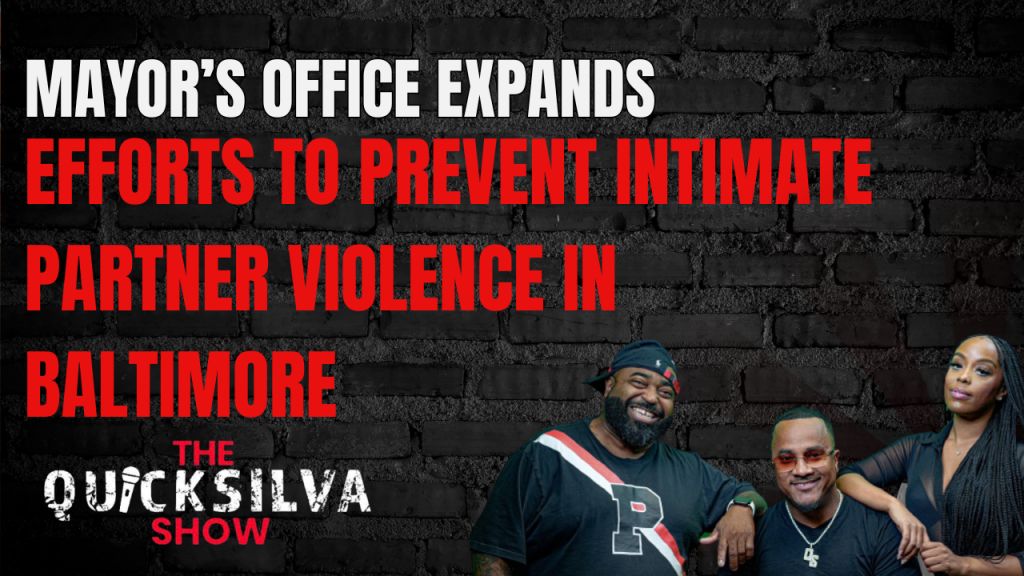
The Mayor’s Office of Neighborhood Safety and Engagement is continuing its ongoing community outreach efforts to raise awareness about intimate partner violence and connect Baltimore residents with resources designed to prevent and respond to abuse.
During an interview on the Quicksilva Show, Deputy Chief of Intimate Partner Violence Prevention Wendy Lee joined the discussion to explain the office’s work and break down what intimate partner violence actually means for residents who may not be familiar with the term.
Lee explained that intimate partner violence, often referred to as IPV, is commonly known as domestic violence. It specifically involves abuse or aggression between current or former spouses or dating partners. She emphasized that while the relationship may no longer be active, the history of a romantic connection is what defines IPV, separating it from other forms of domestic conflict such as parent child or sibling relationships.
According to Lee, the city’s approach is built around three main pillars. The first is awareness, which includes helping residents understand what IPV looks like, how to recognize warning signs, and how to respond safely. She noted that responses matter, and the wrong intervention can sometimes escalate dangerous situations.
The second pillar is intervention. The office works to ensure that when violence is already happening, individuals know they are not alone and can access support systems designed to prevent continued harm.
The third pillar focuses on connection to resources. Through initiatives like Stronger Together, the city brings service providers directly into neighborhoods to link residents with support for IPV, human trafficking, and other safety concerns.
Lee also highlighted a growing concern that intimate partner violence is being seen more frequently among teens and even middle school students. She said education efforts are being expanded into schools to teach young people what healthy relationships look like, including recognizing red flags and green flags in behavior.
For those seeking help, Lee encouraged residents to reach out through the Mayor’s Office of Neighborhood Safety and Engagement social media channels or victim services team. She also pointed to trusted community partners such as House of Ruth Maryland and TurnAround Inc, as well as hospitals, law enforcement, and local community spaces.
Lee added that the office is also working with cosmetology professionals following a new state requirement for domestic violence awareness training during licensing, noting that barbershops and salons often serve as safe spaces where people naturally open up about personal struggles.
She closed by encouraging community members to help spread awareness and use available resources to support those impacted by intimate partner violence.