I-695 Roadwork Won’t Be Done Until 2028, State Officials Say

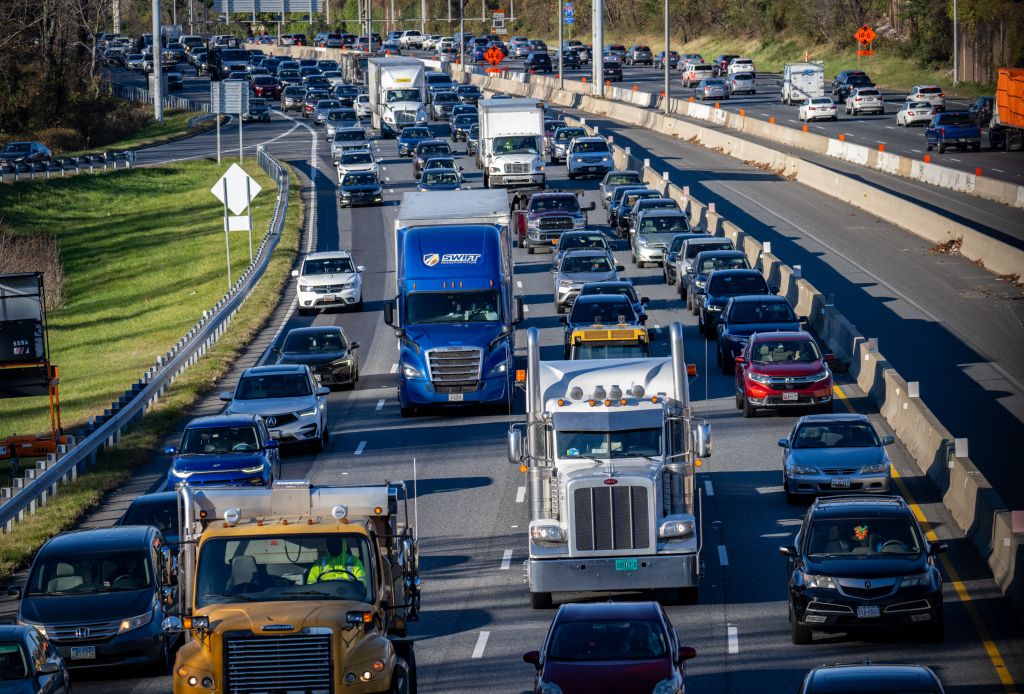
Relief is coming for drivers battling the never-ending traffic and construction on I-695, but not anytime soon. State highway officials say the massive Beltway project, which spans roughly 19 miles, won’t fully wrap up until 2028.
The multi-year effort is converting the inner shoulders of I-695 into peak-hour travel lanes to help ease congestion. But the timeline was pushed back, in part due to the tragic 2023 crash that killed six construction workers near Security Boulevard. That incident led to a pause in work and prompted stricter safety protocols, including wider buffer zones between traffic and work crews.
The project is being completed in two major phases:
- Phase 1: From I-70 to I-83, expected to finish by late summer 2027
- Phase 2: From I-83 to I-95 east of Baltimore, expected to be done by 2028
Officials say the upgrades are essential. I-695 currently sees around 200,000 vehicles per day, and with the collapse of the Francis Scott Key Bridge forcing even more drivers onto the Beltway, traffic has only gotten worse. Projections show daily traffic could reach 248,000 by 2044.
State Highway Administrator Will Pines said the project is designed to improve flow without widening the highway. “There’s a temporary impact now, but this will have long-term benefits,” he said.
Once complete, overhead signs — like the red Xs and green arrows seen on the Bay Bridge — will show drivers when the shoulder is open as an extra travel lane. Some of these T-shaped sign structures are already visible along the route.
According to state estimates, the changes could save drivers:
- Up to 21 minutes on the inner loop (west to east)
- Up to 34 minutes on the outer loop
The work includes:
- Reinforcing shoulders to handle full-speed traffic
- Relocating storm drains and underground infrastructure
- Installing a camera system to detect stalled vehicles, not speeders, and dispatch help quickly
That said, dangerous speeding remains a concern. The 2023 crash involved two cars traveling over 120 mph. Since then, Maryland has deployed more automated speed cameras in work zones, and recently introduced a tiered fine structure:
- Drivers going 40+ mph over the limit when workers are present can now be fined up to $1,000
- In early 2024, cameras issued an average of 813 tickets per day, including 23 maximum fines
Officials say the new penalties are working: fewer drivers are repeating offenses, and overall citations are down.
I-695 Roadwork Won’t Be Done Until 2028, State Officials Say was originally published on wolbbaltimore.com